



Islam Gave Women Rights 1400 Years Ago. Here Are 10.
By Daisy Khan
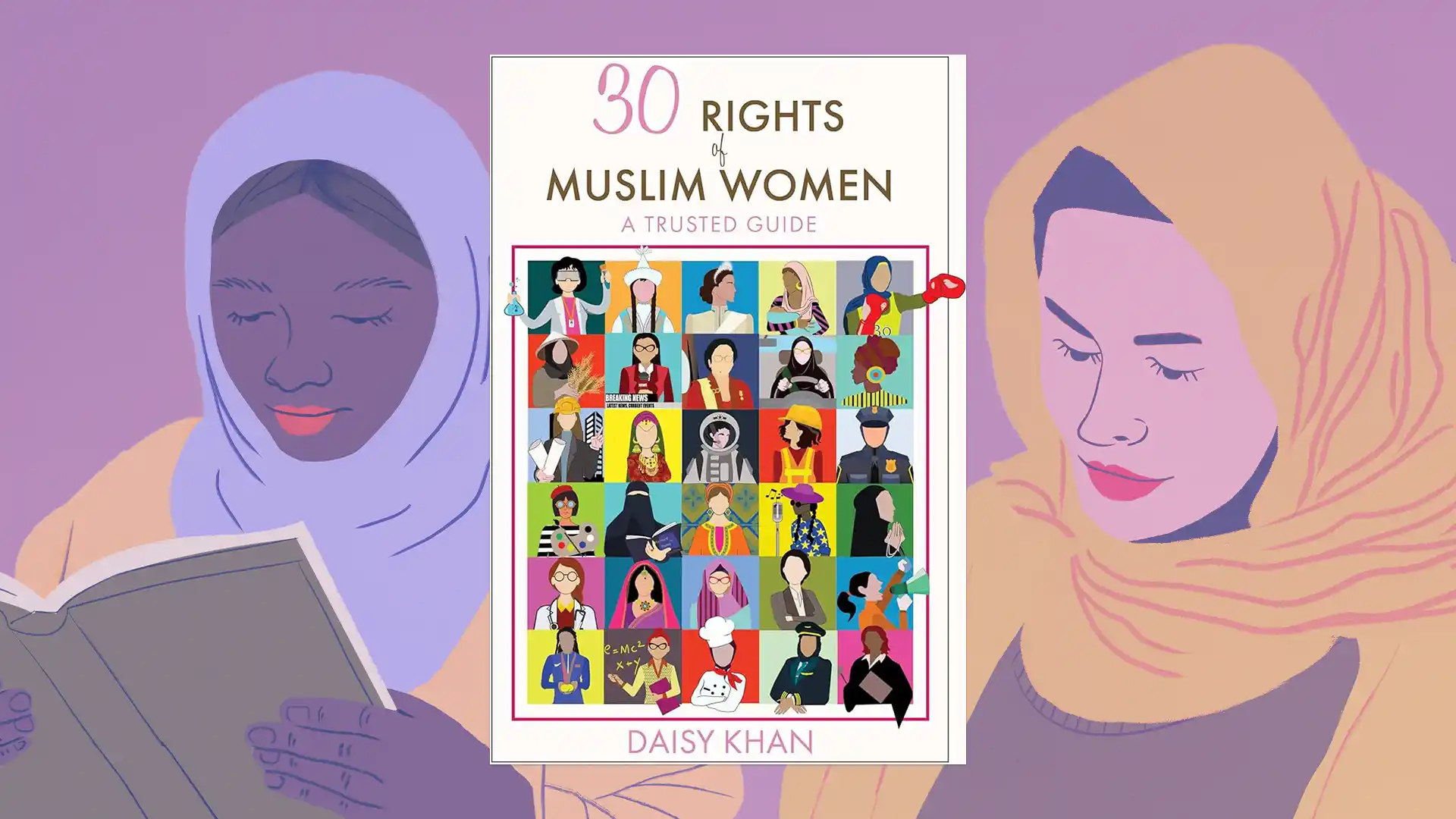
Muslim women are not oppressed by Islam. They were empowered by it through specific rights granted 1400 years ago. The Quran tells a story about women's rights centered on dignity, gender equality, and agency that directly challenges stereotypes. In this solo episode of WISE Women with Daisy Khan, host Dr. Daisy Khan, founder of the W.I.S.E. Initiative and author of "30 Rights of Muslim Women," sets the record straight on what Islam actually says about women's rights versus what politicians and pundits claim. Once you understand what God revealed about women's rights rather than what culture imposed, you can rewrite the narrative.
The Stereotype Versus the Scripture
When people hear Muslim women, they often think of them as oppressed, veiled, silenced, or submissive. These stereotypes about women's rights in Islam float around so casually that they rarely get questioned. But that narrative about Muslim women is wrong and unjust. The Quran acknowledges that men and women are different but never ranks one above the other in terms of women's rights or human dignity.
The Quran condemned pre-Islamic Arabs who buried baby daughters and shattered the belief that men are superior to women. Instead, it declares that men and women are protectors of one another, partners in faith and community. The Prophet Muhammad didn't just preach gender equality; he lived it by raising women's status and expanding their agency. He said all people are equal as the teeth of a comb, with no claim of superiority for man over woman. That statement about women's rights and gender equality came from 7th century Arabia, not modern Islamic feminism.
Islam restored to women what the world denied them through personhood, moral agency, and human dignity. The Quran presents women as moral beings, legal individuals, spiritual companions, social actors, and responsible agents. With that dignity came rights so radical for their time that they remain relevant today. Over centuries, many women's rights were distorted or denied, not by Islam but by culture, patriarchy, and politics.
The 10 Revolutionary Women's Rights Islam Granted
Right #1: Education as Religious Duty
The Quran commands both men and women to seek knowledge. The very first revelation is read or recite, never gendered. The Prophet stated that seeking knowledge is an obligation on every Muslim, male and female. In Medina, he set up literacy programs so women could learn. Education in Islam isn't just a right among women's rights; it's a religious duty.
Right #2: Equal Pay for Work
The Quran affirms both men and women have the right to earn and enjoy their labor equally. Women in early Islam were business owners, farmers, teachers, artisans, and traders who worked and were paid fairly. The principle of equal pay that the West still struggles for was mentioned in the Quran 1400 years ago as part of women's rights and gender equality.
Right #3: Freedom of Expression
Muslims are commanded to stand firm for justice, even if against themselves. There is no gender limit. Men and women alike are called to speak truth to power, a fundamental component of women's rights in Islamic feminism.
Right #4: Spiritual Leadership
From the earliest days, women taught the Quran, guided communities, and served as jurists. A few even led prayers. The Prophet encouraged women to participate fully in religious life. Women served as sheikhs, spiritual guides, teachers, jurists, and some as imams. Spiritual leadership is based on knowledge, not gender, within women in Islam.
Right #5: Right to Choose Spouse
Marriage in Islam is built on mutual consent. A woman's consent isn't symbolic; it's a condition of validity. Forced marriage has no place in the faith. Women's rights include choosing partners and declining proposals. Islam prioritizes the mother's health, meaning contraception is allowed and childbearing decisions must be mutual.
Right #6: Right to Divorce
Before Islam, only men could end marriages. The Quran changed that by giving women the right to seek divorce for any reason with dignity, a revolutionary aspect of women's rights and gender equality.
Right #7: Financial Independence Through Inheritance
Inheritance is a birthright. Women inherit as mothers, daughters, wives, and sisters. The Quran states clearly that women have a share in what parents leave. This was revolutionary because women became rightful stakeholders in wealth and property, making them financially independent rather than dependent on men. These women's rights transformed economic gender equality.
Right #8: Freedom of Movement
From the earliest Muslim community, women moved freely and took part in public life. They attended mosques, went to marketplaces, and were involved in gatherings. The Quran never called for seclusion, only modesty and mutual respect. Women can travel, do business, and participate in politics without guardians. The Prophet's wives and female companions were visible, active, and respected members of society, exemplifying women's rights in Islam.
Right #9: Right to Privacy and Dignity
The Quran fiercely protects a woman's reputation, privacy, and dignity. Her home, voice, and choices are her own. Islam defends not only her body but her name and peace of mind. No one has the right to police how a woman dresses. Modesty is an act of devotion, not domination. The Quran explicitly forbids spying, slander, and false accusations against women, protecting women's rights with severe consequences for violators.
Right #10: Political Leadership
The Quran speaks about female political leadership through the Queen of Sheba. Her story celebrates intelligence, diplomatic skills, and wisdom in avoiding war. She's portrayed as a thoughtful leader who consults, reflects, and decides based on reason and justice. Leadership in Islam is about merit, not gender, proving women's rights includes political participation and gender equality in governance.
How the Quran Stands Alone on Women's Rights
When we look at all these rights together, covering education, work, marriage, leadership, property, and dignity, a truth emerges. These were not modern reforms; they were revelations from God that laid the foundation for women's rights, gender equality, and justice 1400 years ago. Unfortunately, culture, politics, and patriarchy tried to erase these truths about women in Islam. But they're in the Quran, waiting to be reclaimed through Islamic feminism.
The Quran stands alone in clarity and specificity regarding women's rights. These are not Western values imposed on Islam. They are Quranic rights that were revolutionary. While other scriptures affirm spiritual equality, they don't cover legal, economic, social, and personal women's rights all in one place. The Quran addresses women as moral, spiritual, legal, social, and political beings.
How Muslim Women Lost Rights Islam Granted
Many Christian, Jewish, and Hindu women today enjoy rights and freedoms that Muslim women were granted in the 7th century. Yet too often, Muslim women themselves are denied these same divinely mandated women's rights. The problem was never Islam itself. It's how Islam has been misrepresented, misinterpreted, and misapplied. Over centuries, the message was distorted by various actors, but the Quran remains unchanged. Its vision for women's rights, gender equality, and women in Islam is still revolutionary.
Reclaiming Women's Rights From the Quran
The next time someone says Islam oppresses women, remember this. Islam was the first to proclaim women's rights, their equality, and their intellect, not as a concession but as a command from God. Dr. Daisy Khan wrote "30 Rights of Muslim Women" and launched this podcast because as she dove deeper into the Quran, she noticed God chooses the unexpected, the overlooked, and the marginalized. That includes women who are single, widowed, or childless. God's message is clear: everyone has the capacity to serve and lead.
This podcast dedicates a series exploring each of these women's rights, examining what the Quran says, what those rights meant historically, and what they mean for gender equality today. The journey moves beyond headlines and stereotypes back to scripture itself to reclaim the story about women in Islam and set the record straight through Islamic feminism.
This is Wise Women with Daisy Khan – because every story matters. The journey ends not with what we acquire but with what we become. The qualities that sustain us through difficulty often become the very gifts we offer to the world. For more such inspiring stories and discussion, like, follow, and connect with Dr Daisy Khan.
Subscribe to WISE Women with Daisy Khan for upcoming episodes examining each of these 10 rights and how Muslim women are reclaiming what was always theirs
#WISEWomenwithDaisyKhan #WISEWomen #MuslimWomen #IslamicFeminism #WomensRights #Quran #IslamicTeachings #MuslimWomensRights #GenderEquality #ReligiousFreedom #30RightsOfMuslimWomen #DaisyKhan #IslamAndWomen #MuslimFeminism #WomenInIslam #Empowerment #IslamicHistory #QueenOfSheba #MuslimIdentity #FaithAndFeminism
Connect with Dr. Daisy Khan:
Podcast: wisewomenwithdaisykhan.com
LinkedIn: drdaisykhan
YouTube: @WISEWomenwithDaisyKhan
Instagram: WISEwomenwithdaisykhan
Facebook: WISE Women with Daisy Khan
Related Resources:
Comments